

Every year brings a fresh wave of “must-have” AI tools, but most of them fade fast. The ten below have earned their place because they solve real problems — not because they trend on social media.
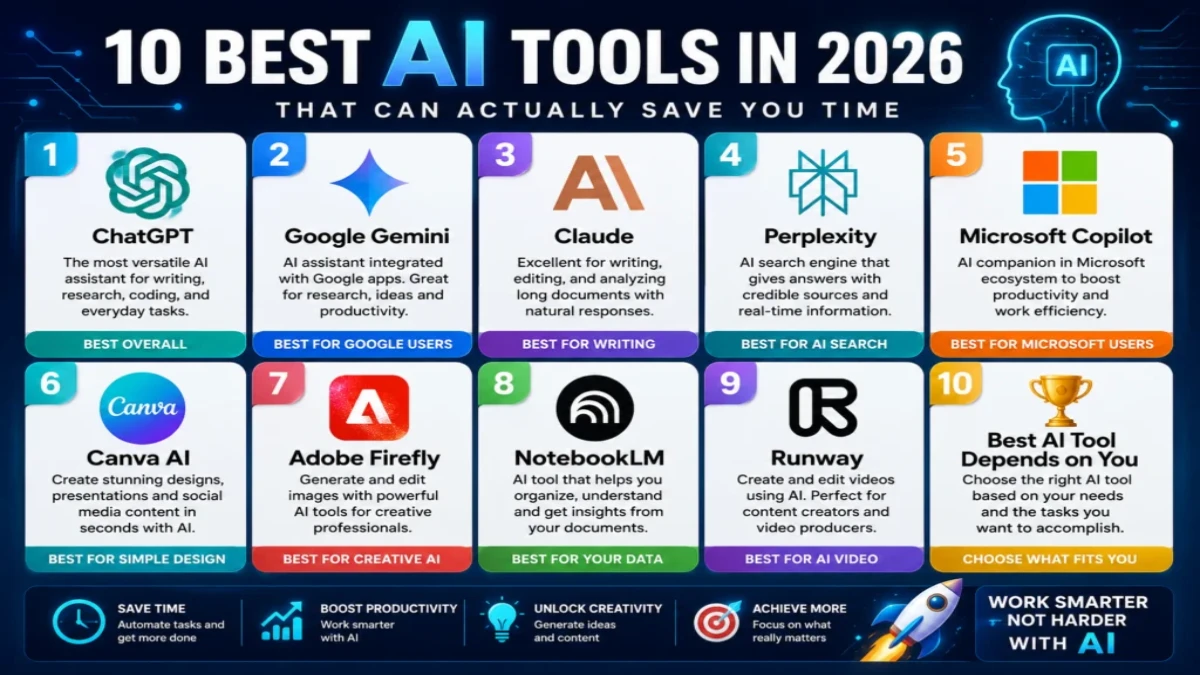
1. ChatGPT — The All-RounderChatGPT remains the most flexible AI assistant on the market. Whether you’re drafting emails, debugging code, or brainstorming a business idea, it adapts to almost any task without needing a specialized tool.Best for: Anyone who wants one assistant for everything.
2. Google Gemini — Built for the Google EcosystemGemini shines when your work already lives inside Google Docs, Sheets, and Gmail. It pulls context from your existing files and helps you move faster without switching platforms.Best for: Heavy Google Workspace users.
3. Claude — The Writer’s AssistantClaude has a reputation for producing clean, well-structured long-form writing. It’s especially strong at editing, summarizing dense documents, and keeping tone consistent across a piece.Best for: Writers, editors, and anyone working with lengthy documents.
4. Perplexity — Search, ReimaginedInstead of scrolling through ten browser tabs, Perplexity gives you a direct answer backed by cited sources.
It’s built for people who want facts fast, with the option to dig deeper.Best for: Research and fact-checking.
5.Microsoft Copilot — Productivity Inside Office
Copilot lives where most office work already happens — Word, Excel, Outlook, and Teams. It’s less about novelty and more about shaving time off daily tasks you already do.
Best for: Teams already invested in Microsoft 365.
6.Canva AI — Design Without the Learning Curve
Canva’s AI features turn rough ideas into polished visuals in minutes. You don’t need design training to create scroll-stopping graphics for social media or presentations.
Best for: Non-designers who need professional-looking content fast.
7. Adobe Firefly — Creative Power for ProfessionalsFirefly brings generative AI into Adobe’s ecosystem, letting creatives generate and edit images without leaving tools like Photoshop. It’s built with commercial use in mind, which matters for professional work.Best for: Designers and content creators already using Adobe.
8. NotebookLM — Your Second BrainNotebookLM organizes and makes sense of your own documents, turning scattered notes and files into structured insights — even audio summaries. It’s less about generating new content and more about understanding what you already have.Best for: Students, researchers, and anyone drowning in notes.
9. Runway — Video Creation Made SimpleRunway lets creators generate and edit video using AI, cutting down what used to take hours of editing into a fraction of the time. It’s become a favorite for short-form and experimental video content.Best for: Video creators and content producers.
10. Best AI Tool Depends on YouThere’s no single “best” AI tool — it depends on what you’re trying to accomplish. The smartest approach in 2026 isn’t picking one tool and sticking with it; it’s knowing which tool fits which task:
Choosing the right AI tool isn’t about chasing trends — it’s about matching the tool to your actual workflow. Try two or three from this list and see which ones save you real time.
By James Carter