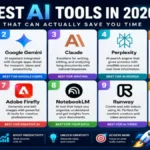

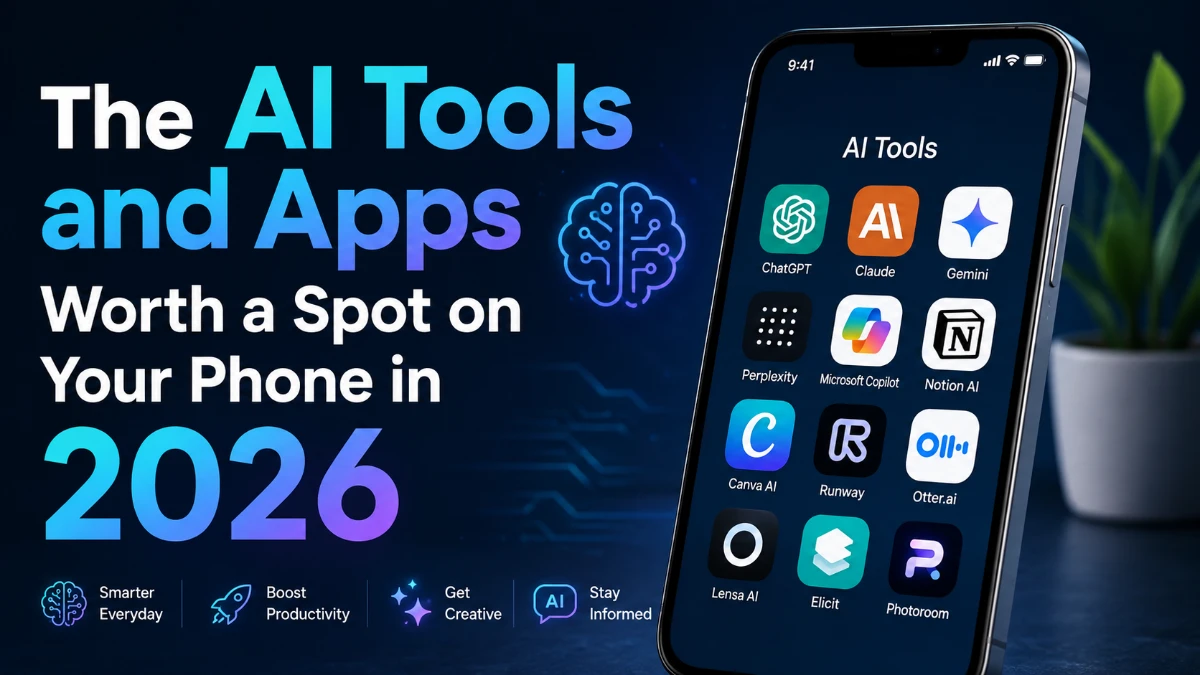

The question today isn’t “should I use AI tools?” anymore — it’s “which ones actually deserve my time?” AI tools have moved from curiosity to necessity, and the real question in 2026 is no longer whether to use them, but which ones are worth your time and money.
With a market flooded with thousands of options, this piece breaks down the categories and standout tools that are actually making a difference this year.
A Fast-Growing Market — But Few Survive
The numbers reveal just how big this boom has become. The generative AI market surpassed $250 billion in 2026, while the number of active AI apps on the Apple and Google app stores crossed the 1,800 mark.
Yet real usage is concentrated in a surprisingly small number of them: just seven apps account for over 70% of total usage hours. In other words, quantity doesn’t equal quality — the best tool is the one that solves a real problem in your day, not the one with the longest feature list.
For Research and Study: More Accuracy, Clearer Sources
Anyone looking for higher accuracy and clearly cited sources will find what they need in dedicated research tools like Perplexity, which was built specifically for that purpose.
This category is especially useful for students, researchers, and journalists who need to verify information before publishing it — not just get a quick answer.
Daily Productivity: From Notes to Design
Beyond text-based chat, everyday work tools have moved to embed AI directly into their core functions.
Notion AI, for instance, has become a popular choice for note-taking, project management, content summarization, and smart daily task organization.
On the design side, Canva now offers AI tools that help with creating designs, editing photos, and writing marketing content with ease, which has made it a go-to platform for content creators and marketers alike.
For anyone focused on writing quality, Grammarly remains essential — it helps catch grammatical and spelling errors and suggests improvements that make text read more professionally, particularly for English writing.
Image and Video Generation: Watch Out for Overpromising
In the visual media space, experts advise caution around the idea of “I want a full video at the push of a button.” Every path in this field has its own tools and its own realistic limits.
The golden rule here is to define your goal first: do you want to generate a brand-new scene from scratch, or improve existing footage through trimming, cleanup, and added elements? The real challenge in video generation isn’t achieving high quality in a single shot — it’s maintaining consistency across consecutive scenes, which is far harder than it sounds.
How to Pick the Right Tool for You
With this many options, the most important rule is that “best” isn’t absolute — it’s relative to each user’s goal. In short:
For general daily use: a full-purpose assistant like ChatGPT or Claude
If you live in the Google ecosystem: Gemini
If you live in the Microsoft ecosystem:
CopilotFor academic or journalistic research:
PerplexityFor task and note management: Notion AI
For design and marketing content: Canva
For improving writing quality: Grammarly