

If you’ve already picked up a smart plug or a security camera, you’ve probably hit the same wall every smart home beginner hits: too many apps, and no easy way to make devices from different brands talk to each other. That’s exactly what a smart home hub fixes.
In 2026, choosing a hub is less about specs and more about picking the right ecosystem. Thanks to Matter, the new universal smart home standard, most hubs now work across Alexa, Google Home, and Apple Home — so the “wrong choice” risk that used to scare beginners away is much smaller than it used to be.
What a Smart Home Hub Actually Does
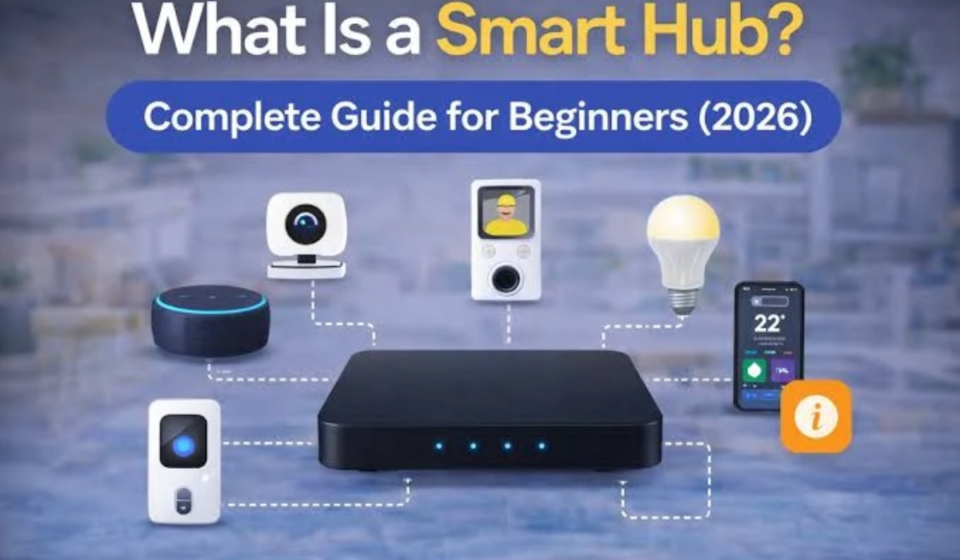
A hub is the central device that connects your smart gadgets so they can be controlled from one app and one voice assistant, instead of five separate apps. Hubs also unlock local automations, meaning your devices can still trigger each other even if your internet goes down.
Not everyone needs one. If all your devices are Wi-Fi only and you’re happy asking Alexa or Google to control them one by one, you can skip a hub entirely. You need one once you want Zigbee or Z-Wave devices, faster local response, or routines that combine multiple brands.
What to Look For Before Buying
Matter support. Any hub you buy today should be Matter-certified. It future-proofs your purchase across ecosystems.
Protocol support. Zigbee and Z-Wave support matters if you already own (or plan to own) sensors, locks, or switches that use those protocols instead of Wi-Fi.
Thread border routing.
Thread is a low-power protocol increasingly used in sensors, locks, and plugs. A hub with a built-in Thread radio saves you from buying a separate Thread router later.
Local processing. Hubs that run automations locally instead of through the cloud keep working during internet outages and respond faster.
Ecosystem fit. Pick based on the voice assistant and phone you already use. Fighting your own habits is the most common beginner mistake.
Top Picks for Beginners
1. Best Overall for Most HouseholdsA hub that supports Matter, Thread, Zigbee, and Z-Wave in one compact device gives you the widest device compatibility without needing to understand the technical differences. Look for one that also works as a phone charger or speaker for added value.
2. Best Budget Entry Point (Under $30)A basic Zigbee-to-Matter bridge is the cheapest way to get sensor and switch compatibility into your existing ecosystem. It won’t support Thread, but for a first hub, that’s a fair tradeoff for the price.
3. Best for Alexa HouseholdsA hub with a built-in touchscreen dashboard, Zigbee and Thread radios, and deep Alexa integration is the easiest starting point if Alexa is already part of your home.
4. Best for Apple UsersA small speaker-style hub that works quietly in the background and connects instantly to Apple Home is the simplest option if your phone is an iPhone. Setup usually takes only a few minutes.
5. Best for Power UsersFor anyone who wants deeper control and doesn’t mind a steeper learning curve, an open, locally-run hub gives the most flexibility and integrations — at the cost of a more technical setup process.
Common Mistakes Beginners Make
Buying a hub before checking your existing devices. If you already own Zigbee or Z-Wave gadgets, make sure your hub supports those protocols before buying based on brand name alone.
Assuming you need only one hub. Many real setups actually use two — for example, a multi-protocol hub bridged into a voice assistant hub. Matter makes this kind of mixing far easier than it used to be.
Ignoring subscription fine print. The hub itself usually has no monthly fee, but some connected features — like extended camera recording — can carry their own subscription cost.
Choosing based on specs instead of ecosystem. The protocol list only matters once you already know which platform — Alexa, Google, Apple, or Samsung — you actually want to live in.
Final Thoughts
There’s no single best smart home hub for everyone in 2026 — the right pick depends on what you already own and which ecosystem you’re most comfortable using daily. For most beginners, starting with a Matter-certified hub that matches your current voice assistant is the safest and simplest first step. Once your hub is set up, revisit our guides on [budget security devices] and [smart plugs & lighting] to start expanding your setup device by device.
Looking for more free tools to make your day-to-day easier? https://fast-convert.net offers a range of free browser-based utilities, including fast and simple file conversions with no installation required.
Published: August 22, 2026 — From James Carter — Your trusted source for honest tech guides