

Foldable phones are no longer the fragile experiments they used to be a few years back. In 2026, the technology behind this form factor has evolved enough to make it genuinely desirable — foldables are now thinner, have better battery life, and show far less visible creasing, closing the gap with traditional flagship phones.
Here’s what’s worth knowing before you consider one.
Two Very Different Form Factors
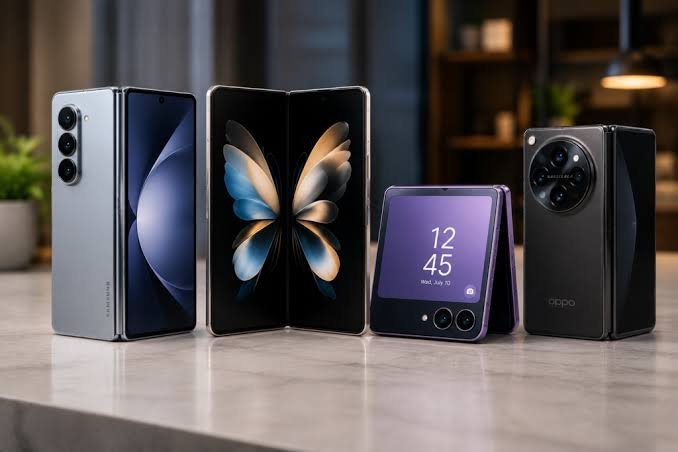
Foldables in 2026 fall into two main categories: book-style models that open into compact tablets, and flip phones that fold down for easier carrying.
A large book-style foldable is ideal for split-screen work, reading, gaming, and travel, while a flip phone suits buyers who value portability and quick, hands-free photography more than screen real estate.
Best Book-Style Foldable
Samsung’s Galaxy Z Fold line remains the most complete option for buyers who want maximum screen space paired with flagship-level hardware, and its worldwide availability and long software support make it the safest overall pick in this category.
Google’s Pixel 10 Pro Fold is also worth serious consideration, particularly because Google has pushed durability forward with a stronger flexible display — addressing one of the biggest long-standing concerns about foldable screens feeling fragile.
Best Flip Phone
Samsung’s Galaxy Z Flip line sets the standard among flip phones this year, offering solid battery life for a foldable and the most mature multitasking software in the category, with reliable split-screen and floating window support.
If style matters more to you than raw specs, Motorola’s Razr line consistently gets praise for its design, and the company’s foldable software has matured into a genuine multitasking tool rather than just a novelty feature.
The Crease Problem Is Finally Improving
One of the most common complaints about book-style foldables has always been the visible crease down the middle of the screen.
Newer hinge designs from brands like OPPO are specifically engineered to smooth out that fold so the crease fades from view — a meaningful step forward after years of manufacturers promising improvements that didn’t fully deliver.
Things to Check Before You Buy
Before paying flagship-level prices for a foldable, it’s worth checking a few specifics: hinge durability ratings, water resistance, and app compatibility, since not every app is optimized for a folding or unfolding screen yet.
Foldables are far more reliable than they were a few years ago, but they remain premium devices with real trade-offs in battery life and long-term durability compared to a standard flagship phone.
The Bottom Line
Foldables in 2026 have genuinely matured from novelty devices into polished flagship alternatives.
Whether they’re worth it for you comes down to how much you actually value the fold itself: if you want maximum productivity, a book-style foldable makes sense; if you want a pocket-friendly premium phone with personality, a flip phone is the better fit.
Either way, this is the first year foldables feel like a real choice rather than an experiment.