

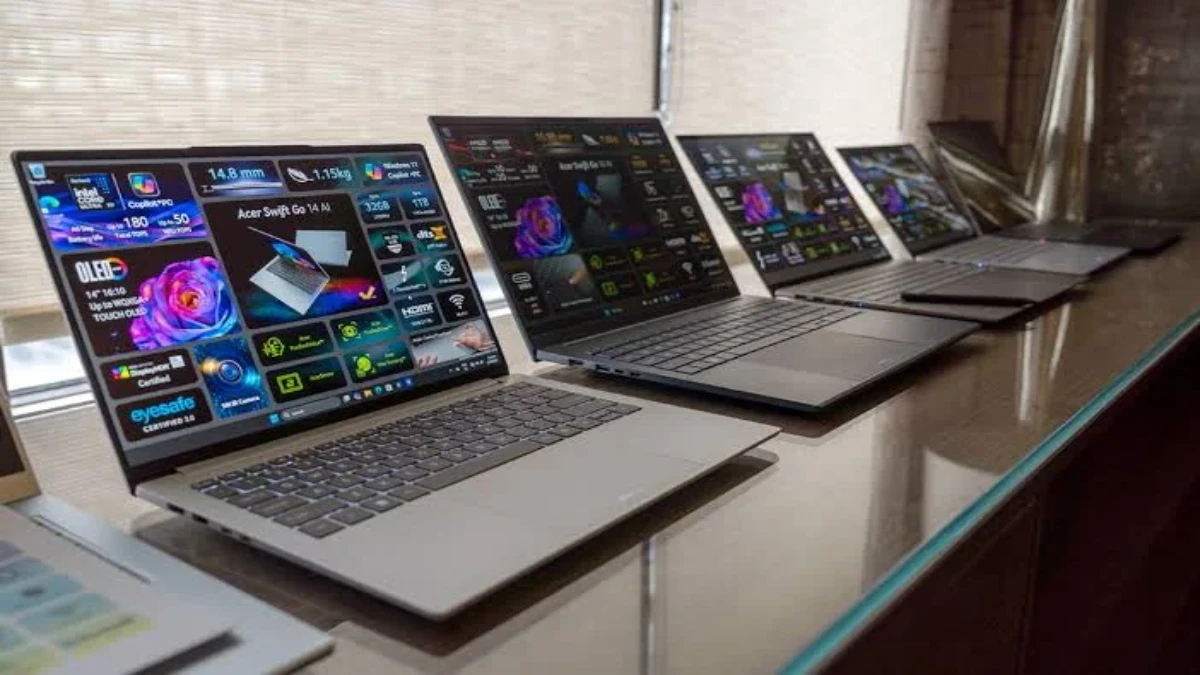

Buying a laptop in 2026 isn’t as simple as picking whatever’s on sale. Between rising prices, AI-branded features on nearly every spec sheet, and more categories than ever — 2-in-1s, Chromebooks, gaming rigs, ultra-thin ultrabooks — it’s easy to end up overwhelmed before you’ve even opened a single product page. Here’s how to cut through the noise and actually pick the right machine for you.
Why Laptops Got More Expensive This Year
As of mid-2026, laptop prices across the board have risen noticeably, with costs on many popular models climbing anywhere from $100 to $500. (Tom’s Guide) The cause isn’t hype or inflation alone — it traces back to a global surge in demand for RAM, driven largely by the memory requirements of AI models and AI agents running locally on modern devices. (TechRadar)
The practical takeaway: don’t assume last year’s price is still accurate. It’s worth checking current listings before setting a budget, since even well-known “budget-friendly” lines have shifted upward this year.
What “AI-Powered” Actually Means on a Laptop
You’ll see “AI” plastered across laptop marketing everywhere in 2026, but it does refer to something concrete. A Copilot+ laptop, for instance, is a PC with AI capabilities built directly into the hardware, letting it draft emails, generate images, and handle other AI-assisted tasks locally rather than relying entirely on the cloud. (PCWorld)
If you’re someone who relies heavily on AI tools for writing, image editing, or coding assistance, this is a feature worth prioritizing. If you mostly browse, stream, and do light office work, it’s a nice-to-have rather than a must-have — and paying extra for it may not be worth it.
Match the Laptop Type to How You Actually Work
If your entire workflow revolves around a browser — email, docs, streaming — a Chromebook remains the simplest and most affordable path, though keep in mind it’s fairly limited without an internet connection. (Tom’s Guide)
If you want flexibility between laptop and tablet modes, a 2-in-1 is worth considering — it can fold flat for note-taking with a touchscreen or prop up like a tent for watching video, which makes it especially popular with students and creatives. (PCWorld)
For gaming specifically, dedicated gaming laptops remain the clear choice, with configurations like an Intel Core Ultra 9 processor paired with an RTX 5070 graphics card delivering strong performance for modern titles without pushing into extreme, top-tier pricing. (PCWorld)
The Specs That Actually Matter
The processor is essentially the brain of the laptop, determining overall speed — a modern Intel Core i5/i7 or an equivalent Apple chip will comfortably handle smooth multitasking and fast app performance. (The Inspect Aspect)
RAM determines how many applications you can comfortably run at once: 8GB is a reasonable baseline for casual, everyday use, but if you’re gaming, editing video, or juggling many demanding tasks at once, 16GB or more is the safer choice. (The Inspect Aspect) Storage matters too — a solid-state drive (SSD) dramatically improves boot times and file access speed compared to older, traditional hard drives. (The Inspect Aspect)
Budget Tiers: What to Realistically Expect
Laptops priced under $400 typically come with entry-level processors, 4–8GB of RAM, and modest storage — fine for web browsing and light office work, but with average battery life and build quality. (The Inspect Aspect)
Stepping up to the $400–$800 range gets you noticeably better processors, 8GB of RAM, and 256GB of SSD storage — enough for multitasking, streaming, and light content creation with a better display. (The Inspect Aspect) Beyond that, the $800–$1,200 range shifts into genuinely performance-focused territory, with more powerful processors, 8–16GB of RAM, and 512GB or larger SSDs. (The Inspect Aspect)
The Bottom Line
There’s no single “best laptop” in 2026 — only the best laptop for how you actually use one. Before comparing spec sheets or chasing the newest AI feature, get honest about your real workflow: browsing versus heavy multitasking, casual use versus gaming, budget versus long-term investment. Once that’s clear, narrowing down the right machine becomes far easier — and far less overwhelming.