

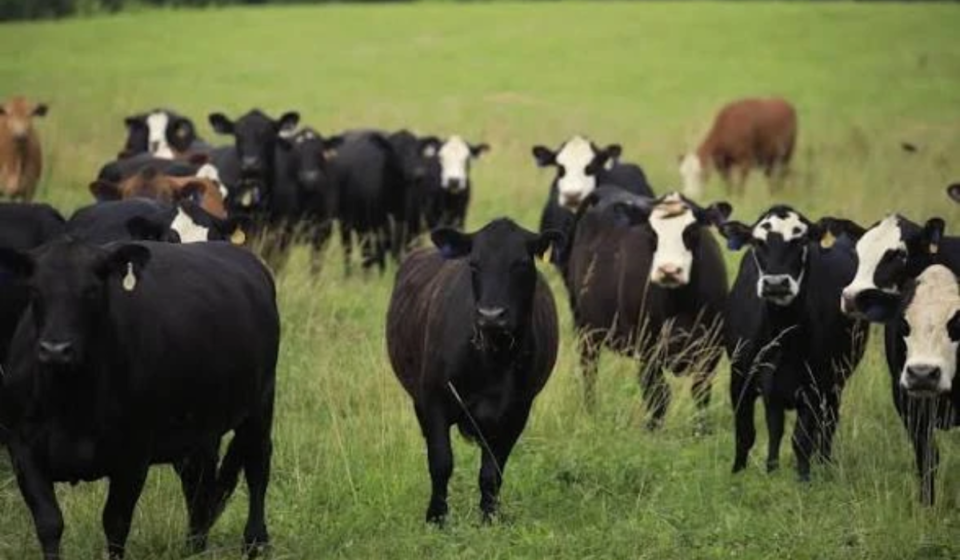

Why is beef so expensive in 2026? The science behind America’s smallest cattle herd in 75 years — drought, a parasitic disease outbreak, and the economics of trade policy.
Introduction
Ground beef in the U.S. hit its highest price on record in late 2025, and the reasons behind it aren’t political — they’re biological, climatic, and economic. Behind every headline about tariffs and trade deals sits a much older story: the U.S. cattle herd has shrunk to its smallest size since the 1950s, and rebuilding it isn’t something policy can fix overnight. Cattle biology, drought science, and a parasitic disease outbreak all set the stage for a supply problem that trade policy is now scrambling to patch.
Here’s the science behind what’s actually happening on American ranches — and why it takes years, not months, to fix.
The Biology of a Cattle Herd: Why It Can’t Rebound Quickly
Unlike crops, which can be replanted the following season, cattle herds recover on a multi-year biological clock. A female calf typically isn’t ready to breed until around 15 months old, carries a calf for roughly nine months, and then that calf needs another two years before it’s ready for slaughter or breeding itself.
That means a rancher’s decision to rebuild a herd today doesn’t show up as more beef in stores for two to three years at minimum. When ranchers instead reduce their herds — which is exactly what happened over the past several years — the effect on supply lingers far longer than the drought or price pressure that triggered it.
Drought: The Root Cause
Much of the herd decline traces back to sustained drought across major cattle-producing regions. Cattle depend on grazing land and water availability; when both shrink, ranchers face a hard choice: buy expensive supplemental feed or reduce herd size. Faced with rising feed costs, many chose to sell off breeding cows — a process called herd liquidation.
The problem compounds itself. Fewer breeding cows today means fewer calves next year, and fewer calves means less future supply regardless of how the weather changes. Wildfires tied to the same dry conditions further damaged grazing land in several states, adding another layer of pressure on an already-shrinking system.
New World Screwworm: A Disease Threat With Global Trade Consequences
A less-discussed factor is Cochliomyia hominivorax — the New World Screwworm, a parasitic fly whose larvae feed on the living tissue of warm-blooded animals, including cattle. The U.S. eradicated the parasite domestically decades ago through a sterile-insect release program, but recent detections in Central America and Mexico raised the risk of reintroduction.
In response, the U.S. restricted live cattle imports from Mexico — a necessary step to prevent a costly disease outbreak, but one that removed a key source of feeder cattle from the U.S. supply chain at the exact moment domestic herds were already shrinking. It’s a clear case where protecting animal health came at a short-term economic cost.
The Numbers: How Small Is “Small”?
.The U.S. cattle herd fell to roughly 86.2 million head as of January 2026 — its lowest point since the 1950s.
.Beef cow inventory dropped by about 8.6% since 2020.
.Ground beef prices reached an average of $6.69 per pound in December 2025, the highest since price tracking began in the 1980s.
Put simply: the country has fewer cattle than it’s had in nearly 75 years, at the same time consumer demand for beef has remained strong — a textbook supply-and-demand squeeze.
Where Trade Policy Comes In
Trade policy can’t create more cattle, but it can temporarily widen the pipeline of available beef from other countries. That’s the logic behind the U.S. decision to expand its tariff-free import quota for lean beef trimmings — the cuts of meat blended into ground beef — allowing up to 300,000 metric tons to enter the country over a 90-day window starting September 1, 2026, in place of the standard out-of-quota tariff.
.It’s important to understand what this policy can and can’t do:
.It can increase near-term supply and put downward pressure on ground beef prices.
.It can’t rebuild the domestic herd, which remains on its own multi-year biological timeline regardless of import levels.
Agricultural economists and rancher groups have flagged this tension directly: importing discounted beef helps consumers now but risks discouraging the very herd rebuilding needed to fix the problem long-term, since it can suppress the prices that would otherwise incentivize ranchers to expand their herds again.
What Would Actually Fix the Supply Problem
Based on the biological and economic factors involved, meaningful herd recovery depends on:
.Multiple consecutive years of adequate rainfall and pasture recovery
.Ranchers rebuilding breeding-cow numbers, which takes 2–3 years to translate into more market-ready cattle
.Continued control of New World Screwworm to safely resume normal cattle trade with Mexico
.Price signals strong enough to make herd expansion financially worthwhile for ranchers, without being undercut by import policy
Bottom Line
The record-high price of beef in 2026 isn’t the result of a single decision — it’s the downstream effect of drought biology, a disease-control tradeoff, and a slow-moving livestock reproduction cycle colliding at the same time. Trade policy can ease the symptom by importing more beef temporarily, but the underlying fix is agricultural and biological: it requires years of herd rebuilding that no policy can accelerate.
Understanding that timeline is the key to understanding why beef prices are unlikely to normalize quickly, regardless of what happens with tariffs.
Published: Aug. 27.2026— From James Carter — Your trusted source for honest science explainers