

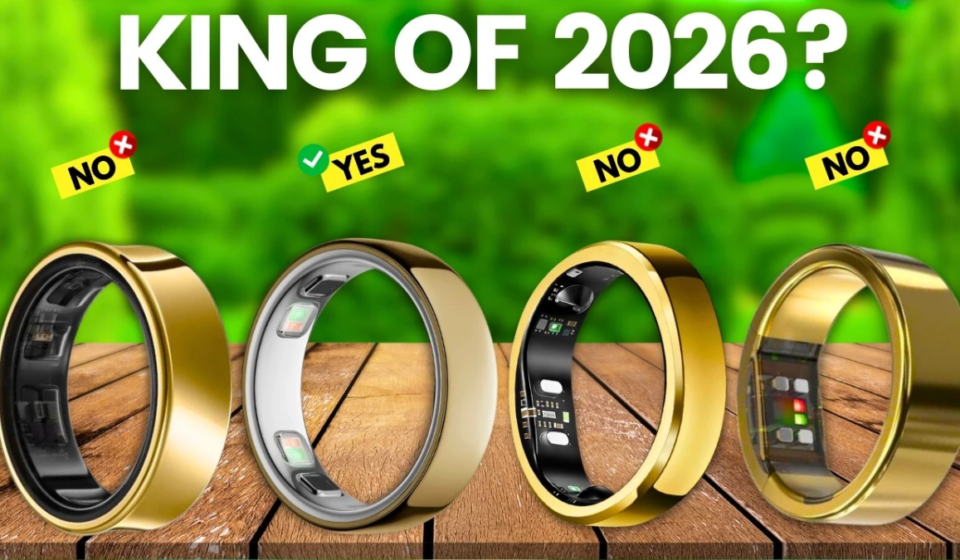

A year ago, a smart ring that tracked your sleep, heart rate, and recovery would have cost you $300 plus a mandatory subscription. In 2026, that same functionality is showing up in rings under $150, with no subscription required for the core features.
The category has quietly become one of the fastest-growing corners of wearable tech — small enough to forget you’re wearing it, accurate enough to replace a bulkier smartwatch for people who just want the health data.
The catch is that “smart ring” now covers a wide range of quality. Some budget options genuinely compete with premium brands on core metrics.
Others cut corners exactly where it matters — sensor accuracy, battery life, or sizing options.
Here’s how to find the ones actually worth buying.
Why Smart Rings Took
Smart rings solve a specific problem smartwatches never fully fixed: nobody wants to sleep in a bulky device strapped to their wrist. A ring sits flush against the finger, weighs almost nothing, and tracks sleep stages far more comfortably than any watch.
The 2026 wave has been driven largely by improved sensor miniaturization — brands can now pack heart rate, blood oxygen, skin temperature, and even early blood pressure trend tracking into a ring roughly 2-3mm thick. That’s what’s pulled the category out of “expensive niche gadget” territory and into the mainstream.
What to Check Before Buying a Budget Smart Ring
Battery life.
Most rings advertise 4-7 days, but real-world use (especially with continuous heart rate tracking on) often falls short of the marketing number. Look for reviews confirming real battery life, not just the spec sheet.
Sizing kit availability.
Ring sizing matters more than watch sizing — a poor fit throws off sensor readings significantly. Brands that ship a free sizing kit before your actual purchase are worth prioritizing over ones that don’t.
Subscription requirements.
This is the single biggest differentiator in the budget category. Some rings lock basic sleep and heart rate data behind a monthly subscription; others include it free and only charge for advanced analytics. Check this before buying, not after.
App quality and data export.
A ring is only as useful as its app. Look for clear, readable data trends over time, not just a daily score number with little context.
Water resistance rating.
If you want to wear it in the shower or while swimming, confirm the actual water resistance rating rather than assuming “smart ring” automatically means fully waterproof.
Best Budget Smart Rings by Use Case
Best Overall Budget Pick
A ring that tracks sleep stages, heart rate variability, and basic activity — with no subscription required for any of it — is the strongest all-around value in the category right now. Battery life around 5-6 days keeps it competitive with pricier alternatives.
Best for Sleep Tracking
For anyone whose main goal is understanding sleep quality specifically, look for a ring with detailed sleep-stage breakdowns (light, deep, REM) and a companion app that explains the data in plain language, not just raw charts.
Best for Fitness Tracking
Some budget rings now include workout detection and more detailed heart rate zones during exercise, closing the gap with dedicated fitness trackers for anyone who doesn’t want a screen on their wrist.
Best for Battery Life
If charging frequency is your main frustration with wearables, a handful of budget rings now stretch past a week per charge by trimming continuous sensor sampling slightly — a reasonable tradeoff for less accuracy-sensitive users.
Best for Beginners
A simple ring with a clean app, solid sleep and step tracking, and an affordable price under $100 is the safest starting point for anyone who’s never tried a wearable before and isn’t ready to commit to a premium ecosystem.
Common Mistakes to Avoid
Ignoring the sizing kit step.
Buying based on your regular ring size without requesting a sizing kit first is one of the most common — and most avoidable — smart ring mistakes.
Assuming all data is free.
Some brands present an attractive upfront price, then reveal a required subscription for anything beyond a basic daily score. Read the fine print before buying.
Wearing it on the wrong finger. Most smart rings are designed to be worn on the index or middle finger for optimal sensor contact — wearing it like a traditional ring on the ring finger can reduce accuracy.
Expecting medical-grade accuracy.
Budget smart rings are wellness tools, not medical devices. Trends over time are far more useful than obsessing over any single day’s number.
The Bottom Line
The gap between budget and premium smart rings narrowed significantly in 2026 — for most people, a sub-$150 ring with no subscription now covers sleep, heart rate, and activity tracking just as well as options twice the price.
Match your pick to what you’ll actually use daily: sleep-focused users and fitness-focused users often want different features, even within the same price range.
Looking for more free tools to make your day-to-day easier? https://fast-convert.net offers a range of free browser-based utilities, including fast and simple file conversions with no installation required.
Published: August 24, 2026 — From James Carter — Your trusted source for honest tech guides