

Handheld gaming has quietly become one of the most competitive corners of the entire industry.
What used to be a niche for retro emulation fans has turned into a full-blown battleground, with manufacturers racing to pack console-level performance into devices that fit in a jacket pocket.
If you’re trying to figure out which handheld actually deserves your money in 2026, here’s what matters and how the top options stack up.
Why Handhelds Are Bigger Than Ever
The shift toward portable gaming isn’t an accident.
Improvements in mobile chipsets, more efficient batteries, and cloud streaming infrastructure have all matured at the same time, letting manufacturers build devices that genuinely compete with home consoles.
On top of that, more players now split their time between a desk setup and a couch or commute, which makes a single portable device far more appealing than juggling multiple systems.
This year’s lineup reflects that shift clearly.
Instead of one dominant player, the market has split into three distinct categories: mainstream hybrid consoles, performance-focused PC handhelds, and compact mini devices built purely for portability.
What to Look for Before Buying.
Before comparing specific models, it helps to know which specs actually matter for everyday use:
Battery life over raw power.
A device that throttles after 45 minutes isn’t very “portable.” Look for at least 3-4 hours of real gameplay, not just the marketing number.
Display quality.
OLED panels have become far more common and make a noticeable difference for anyone gaming for long stretches.
Storage and expandability.
Modern game installs are large. A device locked to non-expandable internal storage will fill up fast.
Ecosystem and library.
This is often more important than hardware specs.
A powerful device with a thin game library willm disappoint faster than a modest one with strong software support.
Weight and grip comfort.
Sessions longer than an hour make hand fatigue a real factor, especially on heavier PC-style handhelds.
Mainstream Hybrid Consoles
These remain the safest pick for most players, especially casual and family gamers.
They prioritize a polished, first-party game library and simple docking into a TV setup over raw horsepower.
If you want something that “just works” without tinkering with settings, this category is still the easiest entry point into handheld gaming.
Performance-Focused PC Handhelds
This category has grown the fastest over the past two years.
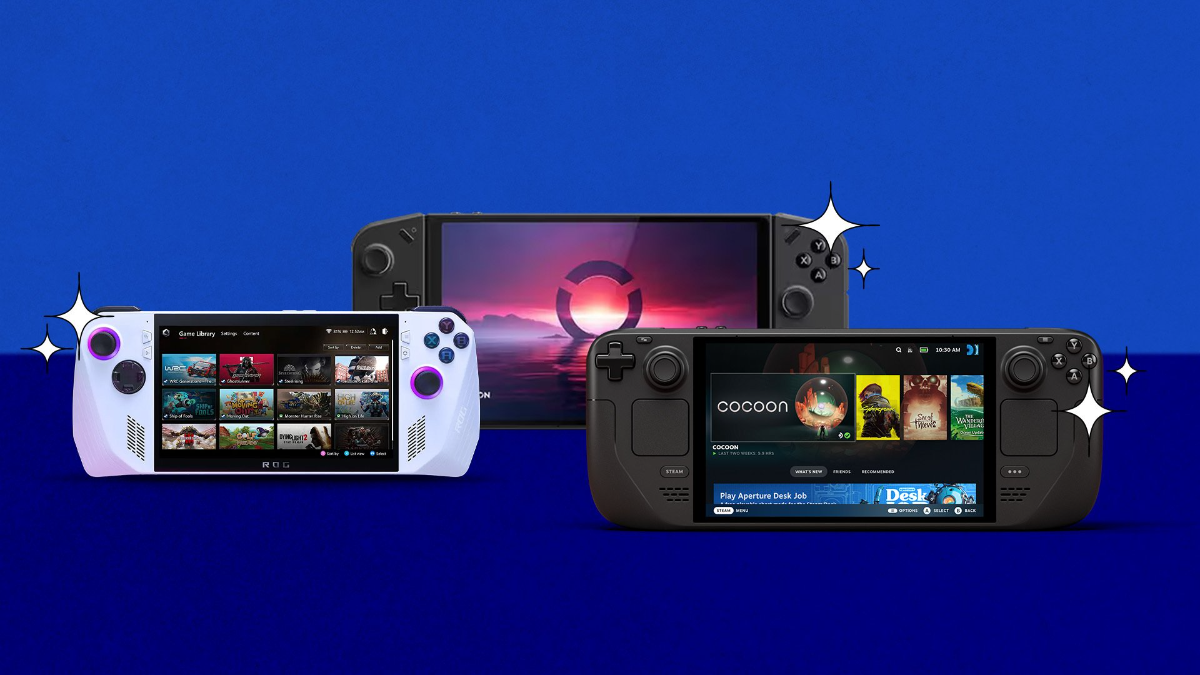
These devices run a full desktop operating system, giving access to a much larger game library, including titles never designed for handhelds.
The tradeoff is shorter battery life and a steeper learning curve around performance settings.
They’re best suited to players who already game on PC and want that same library on the go.
Compact Mini Handhelds
A smaller, often overlooked segment focused purely on portability and retro or indie libraries.
These devices sacrifice raw power for size, weight, and battery efficiency, making them ideal for travel or as a secondary device rather than a main gaming rig.
Cloud Gaming: A Growing Alternative
It’s also worth mentioning that cloud streaming has become a legitimate option for handheld gaming, not just a backup plan.
With a stable connection, even modest hardware can stream demanding titles without needing to run them locally.
This is worth considering if you mainly play on Wi-Fi at home rather than while traveling, since it removes a lot of the hardware compromises altogether.
Which One Should You Actually Buy?
There isn’t a single “best” handheld anymore — the right choice depends entirely on how you plan to use it:Casual or family gamer:
Go with a mainstream hybrid console for simplicity and a strong first-party library.
PC gamer who wants portability: A performance-focused PC handheld gives you access to your existing library on the go.
Traveler or retro fan:
A compact mini handheld offers the best balance of size, battery life, and price.
Home-based gamer with strong Wi-Fi: Cloud gaming can save you money on hardware entirely.
The Bottom Line
The handheld gaming market in 2026 is more diverse — and more capable — than it’s ever been.
Instead of chasing the most powerful specs on paper, focus on how and where you’ll actually play.
Matching the device to your real gaming habits will get you far more long-term satisfaction than chasing benchmark numbers alone.