

Definition
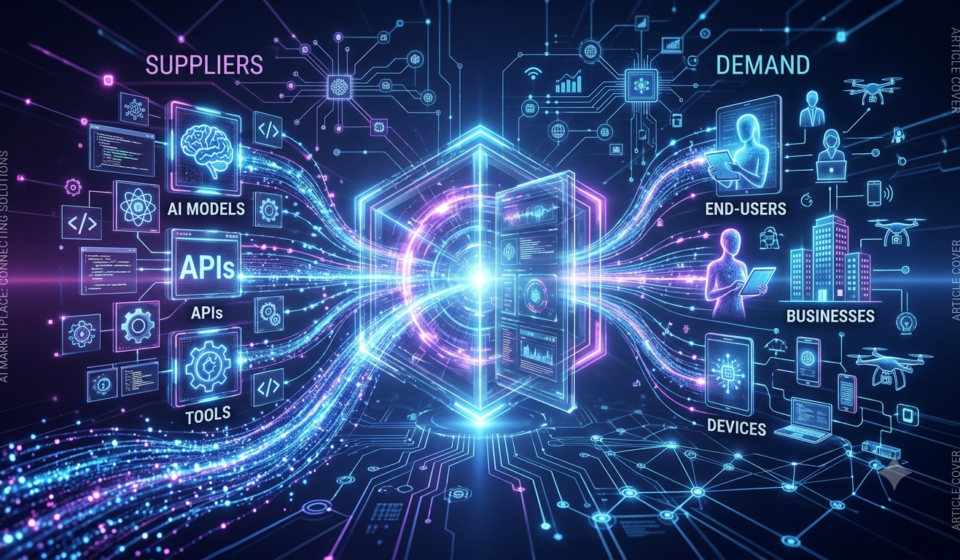
An intermediary in an AI tools marketplace is a neutral, connecting entity that bridges AI tool creators/developers and end-users/buyers, facilitating transactions, trust, discovery, and smooth exchange—without being the original creator or the end consumer.
Core Purpose
To solve the fundamental gap between supply (developers building AI models, plugins, APIs, apps) and demand (businesses, researchers, individuals seeking AI solutions) by reducing friction, verifying quality, simplifying access, and ensuring fair, transparent interactions.
Key Responsibilities & Functions
1. Discovery & Curation
– Organize, categorize, and tag AI tools (generative AI, image generators, LLMs, automation, analytics, etc.)
– Build search, filters, and recommendation systems for fast, relevant matches
– Curate featured listings and highlight trending/top-rated tools
2. Verification & Trust
– Vet tools for functionality, safety, data privacy, and compliance
– Confirm developer identity and credibility
– Display ratings, reviews, usage stats, and transparency reports
– Enforce quality standards and remove malicious/non-functional tools
3. Transaction & Commercial Facilitation
– Handle pricing, licensing models (subscription, one-time, API-based, free/freemium)
– Process payments, invoicing, and currency handling
– Manage subscriptions, upgrades, and refunds
– Define commission/fee structure for the marketplace
4. Access & Integration
– Provide unified access: dashboards, API keys, single sign-on (SSO)
– Standardize documentation, SDKs, and integration guides
- Enable seamless embedding/connecting tools into user workflows
5. Mediation & Support
– Resolve disputes between creators and users
- Manage takedown requests, copyright, and IP claims
- Offer customer support for platform/transaction issues
– Monitor performance and uptime of listed tools
6. Compliance & Governance
– Enforce data protection laws (GDPR, CCPA, local regulations)
– Publish clear Terms of Service, Privacy Policy, and acceptable use rules
– Audit AI tools for bias, harmful content, and legal compliance
Types of Intermediaries in an AI Tools Marketplace
1️⃣ Marketplace Operator
Role:
Full platform owner — lists, hosts, governs, and processes transactions for AI tools. Controls the entire marketplace experience from discovery to payment.
Examples:
Hugging Face, OpenAI GPT Store
2️⃣ Aggregator
Role:
Curates and organizes AI tools but links out to external platforms; does not handle direct sales, payments, or hosting. Focuses purely on discovery and categorization.
Examples:
Futurepedia, There’s An AI For That
3️⃣ Reseller / Distributor
Role:
Acquires or bundles AI tools, then resells them with added services, support, or customizations. Adds value on top of the original product.
Examples:
Select B2B AI solution providers
4️⃣ Broker / Matchmaker
Role:
Connects buyers with custom AI project needs to suitable developers or providers. Facilitates the match but does not own or host the tools themselves.
Examples:
Freelance AI service platforms
5️⃣ API Hub
Role:
Acts as a centralized gateway for discovering, testing, and calling AI APIs from multiple providers through a unified interface.
Examples:
RapidAPI
All five function as intermediaries — but each operates with a different scope, business model, and level of control over the tools and transactions.
Value to Both Sides
For Developers/Creators
– Instant global audience & traffic
– No need to build payment, hosting, or discovery systems
– Trust & credibility through platform verification
- Analytics & user insights
For Users/Buyers
– One-stop shop for diverse AI tools
- Verified, reviewed, and standardized options
- Unified billing & access
- Dispute protection and consistent terms
Core Challenges
– Balancing openness with quality control
- Avoiding bias in recommendations
- Managing data privacy when tools process user data
– Setting fair commissions that satisfy both sides
- Keeping up with rapid AI innovation and new tool categories
Conclusion
Intermediaries are essential to the AI tools marketplace, connecting creators with users while ensuring trust, quality, and smooth transactions. Each type—from marketplace operators to API hubs—serves a unique purpose, making AI more accessible and the ecosystem more efficient. As AI advances, these connecting platforms will remain central to how we discover, evaluate, and adopt new AI technologies.
Learn more from:
Hugging Face — AI Marketplace and OpenAI GPT Store