

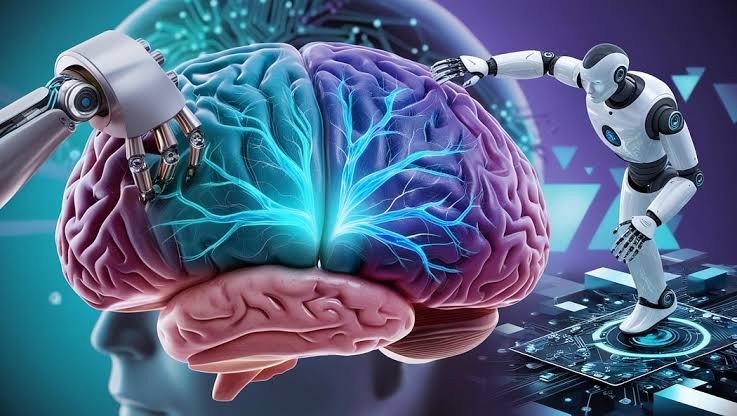

Artificial intelligence has transformed nearly every industry, from healthcare to autonomous driving. But behind the magic lies a growing problem: AI is enormously energy-hungry. As AI adoption accelerates, researchers are looking to an unlikely source of inspiration — the human brain — for a fundamentally different kind of computer architecture. This emerging field is called neuromorphic computing, and in 2026 it has taken several significant steps from laboratory curiosity toward practical reality.
What Is Neuromorphic Computing?Neuromorphic computing is an approach to hardware design that mimics the structure and function of the biological brain.
Instead of separating memory and processing into distinct units — as conventional processors do — neuromorphic systems integrate them together, much like neurons that both store and process information simultaneously.
These systems communicate using brief electrical or optical pulses called “spikes,” mirroring how biological neurons fire and transmit signals across synapses.
As Brad Theilman, a computational neuroscientist at Sandia National Laboratories, put it: “We’re just starting to have computational systems that can exhibit intelligent-like behavior. But they look nothing like the brain, and the amount of resources that they require is ridiculous, frankly”
Why Today’s AI Hardware Uses So Much EnergyConventional computer chips — including the GPUs that power modern AI — operate on what engineers call the von Neumann architecture.
In this model, data must constantly travel back and forth between memory units and processing units.
This shuttling of data consumes vast amounts of electricity and generates significant heat.The human brain, by contrast, performs sophisticated computations — including motor-control tasks like hitting a tennis ball — using remarkably little power.
James B. Aimone, Theilman’s colleague at Sandia, notes that these everyday tasks are “exascale-level problems that our brains are capable of doing very cheaply
This enormous efficiency gap is the driving motivation behind neuromorphic computing: if hardware can be built to work more like the brain, AI could become dramatically more energy-efficient.
How Brain-Inspired Chips Work
Neuromorphic chips use specialized components to emulate neurons and synapses. One key component is the memristor — a device that can change its electrical resistance and retain that state, much like a biological synapse that strengthens or weakens over time.
Memristors enable “in-memory computing,” where data is processed where it is stored, reducing the energy cost of moving data between separate memory and processing units.In April 2026, researchers at the University of Cambridge, led by Dr. Babak Bakhit, engineered a breakthrough memristor using a modified form of hafnium oxide (HfO₂).
By adding strontium and titanium through a two-step growth process, they created p-n junctions at the interfaces between layers, enabling a controlled, interface-based switching mechanism — rather than the unpredictable filament-based switching used in most existing memristors.
The results were published in Science Advances
The performance was striking:
Property
Energy reduction potential
Switching current
Stable conductance levels
Switching-cycle stability
State retention
Learning behavior demonstrated
The Cambridge team’s device also demonstrated spike-timing dependent plasticity — the biological learning rule that allows neurons to strengthen or weaken their connections based on the timing of signals.
This means the hardware can learn and adapt, not merely store data. A patent application has been filed by Cambridge Enterprise, the university’s innovation arm
Beyond Pattern Recognition: Neuromorphic Chips Solve Physics Equations
Neuromorphic systems were traditionally viewed as tools for pattern recognition and accelerating artificial neural networks.
But in February 2026, researchers at Sandia National Laboratories demonstrated something unexpected: neuromorphic hardware can solve partial differential equations (PDEs) — the mathematical foundation for modeling fluid dynamics, electromagnetic fields, and structural mechanics.
Theilman and Aimone developed an algorithm that closely mirrors the structure of cortical networks, revealing what Theilman described as “a natural but non-obvious link” to PDEs — a connection that had gone unrecognized for 12 years after the underlying computational-neuroscience model was first introduced.
The work was published in Nature Machine Intelligence
As Aimone stated: “You can solve real physics problems with brain-like computation. That’s something you wouldn’t expect because people’s intuition goes the opposite way. And in fact, that intuition is often wrong”
This breakthrough could contribute to the development of the first neuromorphic supercomputer — one that could tackle simulations currently requiring vast, energy-intensive supercomputers, potentially transforming national-security computing, weather forecasting, and materials science.
Light-Based Neuromorphic Chips: Computing at the Speed of Light
Another frontier is photonic neuromorphic computing — using light instead of electricity to process information. In March 2026, a team at Xidian University in China, led by Shuiying Xiang, developed a two-chip photonic neuromorphic system published in the journal Optica (Optica).
The system consists of:A 16×16 Mach-Zehnder interferometer mesh chip for linear spiking neural network computationA distributed feedback laser array with a saturable absorber for nonlinear spiking activationPreviously, photonic neural systems could only handle linear computations optically; nonlinear steps required converting signals back to electronics, adding delay and reducing efficiency.
Xiang’s chips perform both linear and nonlinear computation entirely in the optical domain, requiring no electronic conversion for learning or decision-making.
The performance figures are remarkable:
Measurement
Linear computation energy efficiency
Nonlinear computation energy efficiency
On-chip computing latency
Trainable parameters
CartPole task accuracy loss (hardware vs. software)
Pendulum task accuracy loss
The system successfully demonstrated reinforcement learning — learning through trial and error — on tasks like balancing a pole on a moving cart (CartPole) and swinging a pendulum upright (Pendulum). The researchers plan to build a larger 128-channel chip capable of neuromorphic autonomous navigation.
Analogue Neuromorphic Platforms: The BrainScaleS-2 System
In Europe, the BrainScaleS-2 platform — developed at Heidelberg University and accessible freely through the EBRAINS research infrastructure — has been described as one of the world’s most advanced analogue neuromorphic platforms.
Unlike digital simulations of neural networks, BrainScaleS-2 implements neuron and synapse models directly in physical analogue circuits, operating in continuous time.
At the 2026 Neuro Inspired Computational Elements (NICE) Conference in Atlanta, researchers presented three advances:
Real-time analogue signal processing — The platform can accept direct analogue sensor input without conventional signal conversion, localize sound sources in real time, and control a servo motor — all fully on-chip from sensory input to physical action.
Multi-chip scalability — A new multi-chip system uses FPGA-based communication with sub-microsecond chip-to-chip latency, enabling larger-scale neuromorphic deployments.
Automated calibration — Researchers demonstrated “amortized inference” — a simulation-based method for efficiently estimating the parameters of analogue neuron circuits, making it easier to calibrate and program neuromorphic hardware.
The platform supports both PyTorch interfaces for machine learning and PyNN interfaces for neuroscience, and is freely accessible to researchers worldwide via ebrains.eu/nmc (EBRAINS).
Applications: From Robotics to Healthcare
The potential applications of neuromorphic computing span multiple domains:
Robotics and Autonomous Systems
Photonic neuromorphic chips could enable robots that learn on the go through real-world interaction, with on-chip computing latencies as low as 320 picoseconds.
The BrainScaleS-2 platform has already demonstrated end-to-end on-chip processing from sensory input to motor control — a critical capability for autonomous robots (EBRAINS).
Edge AI and Wearable Devices
The extreme energy efficiency of neuromorphic hardware makes it ideal for “always-on” AI in battery-powered devices — from smart sensors to wearable health monitors — where sending data to cloud servers is impractical or privacy-concerning.
Related: Brain-Inspired AI and Brain-Computer Interfaces
While not strictly neuromorphic hardware, the convergence of brain-inspired computing principles with brain-computer interfaces (BCIs) is accelerating.
In July 2026, researchers at Carnegie Mellon, led by Bin He, published a study in Nature Communications demonstrating a “sensory-guided human-machine joint-learning framework” that enabled 31 untrained participants to achieve rapid control of noninvasive BCIs — reaching 86% accuracy in one-dimensional cursor control and 77.5% in two-dimensional control (Tech Xplore).
For context, fewer than 100 people worldwide have benefited from implantable BCI technology over the past 30 years, due to prohibitive costs and surgical risks. Bin He described the work as bringing “noninvasive BCIs closer to scalable, everyday use” (Tech Xplore).
Scientific Simulation
The Sandia breakthrough in solving PDEs on neuromorphic hardware could eventually allow complex physics simulations — from weather forecasting to nuclear-system modeling — to run on far less power than conventional supercomputers require.
Challenges Ahead
Despite the promise, neuromorphic computing faces significant hurdles:Manufacturing compatibility:
The Cambridge memristor requires fabrication temperatures of around 700°C — higher than standard semiconductor processes allow.
Reducing this temperature is the main barrier to chip-scale integration (ScienceDaily).State retention:
The Cambridge device retains its programmed state for about one day — sufficient for many learning tasks, but far short of the years-long retention needed for permanent storage.Scale: Current neuromorphic systems operate at hundreds to thousands of parameters, while today’s largest conventional AI models operate at far greater scales. Bridging this gap remains a monumental engineering challenge.
Software ecosystem:
Conventional AI has mature frameworks like PyTorch and TensorFlow. Neuromorphic computing lacks equivalent standardized tooling, though platforms like BrainScaleS-2 are beginning to close this gap with PyTorch-compatible interfaces.
Conclusion
Neuromorphic computing represents one of the most promising paths toward making AI dramatically more energy-efficient, faster, and biologically plausible.
The breakthroughs of 2026 — from memristors that cut energy use by 70%, to photonic chips that compute at the speed of light, to neuromorphic hardware solving physics equations once reserved for supercomputers — suggest that brain-inspired architecture is no longer just a laboratory curiosity.
It is becoming a viable alternative to the energy-hungry status quo.As Aimone reflected:
“If we’ve already shown that we can import this relatively basic but fundamental applied math algorithm into neuromorphic — is there a corresponding neuromorphic formulation for even more advanced applied math techniques?” (ScienceDaily).The answer may reshape the future of computing itself
SourcesSandia National Laboratories — Brain-Inspired Machines Solve Physics Equations — ScienceDaily, February 14, 2026University of Cambridge — Brain-Like Chip Could Slash AI Energy Use by 70% — ScienceDaily, April 23, 2026Photonic Chips Advance Real-Time Learning in Spiking Neural Systems — Optica, March 5, 2026EBRAINS Researchers Present Latest Neuromorphic Computing Advances at NICE — EBRAINS, July 28, 2026Human-Machine Learning Boosts Noninvasive Brain-Computer Control — Tech Xplore, July 15, 2026