

Science is far more than a collection of facts, formulas, or laboratory experiments—it is the driving force behind human progress, a way of thinking, and a never-ending journey to understand the world around us. From the smallest atom to the vastness of the entire cosmos, science shapes every aspect of our existence, answers our deepest questions, and opens doors to possibilities we once could only imagine. It is the language of nature, the tool that turns curiosity into knowledge, and the foundation upon which modern civilization stands.
At its heart, science begins with a simple question: Why? Since the dawn of humanity, we have looked up at the stars, wondered about the changing seasons, questioned the origin of life, and sought cures for illness. Every great discovery started with curiosity. Through observation, experimentation, and analysis, science transforms uncertainty into understanding. It does not claim to know everything, but it provides a reliable method to seek the truth. The scientific method—observing, forming a hypothesis, testing it, and drawing conclusions—has proven to be the most powerful way humanity has ever devised to distinguish fact from fiction and reality from myth.
The impact of science on our daily lives is immeasurable. In medicine, it has turned once-deadly diseases into treatable conditions, extended human life expectancy, and improved the quality of life for billions of people. Vaccines, antibiotics, advanced surgical techniques, and gene editing technologies are all gifts of scientific research. In communication and information, the digital revolution—born from breakthroughs in physics, electronics, and computer science—has connected the entire world. Today, we can speak to someone on the other side of the planet in an instant, access the sum of human knowledge with a few taps on a screen, and travel across continents in hours rather than months. Transportation, agriculture, energy production, and architecture all stand on the shoulders of scientific innovation, making life safer, easier, and more comfortable than ever before.
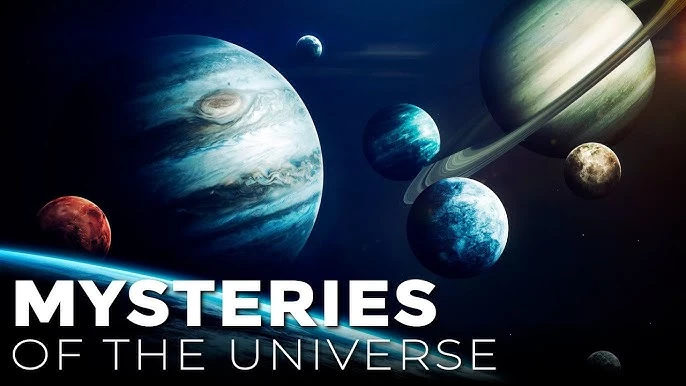
Beyond convenience and technology, science gives us a profound perspective on our place in the universe. Astronomy reveals that we live on a tiny planet orbiting an ordinary star within a galaxy containing hundreds of billions of stars, yet it also shows that the same physical laws that govern the cosmos also exist within us—we are literally made of stardust. Biology teaches us the miracle of life, how every living being is connected through evolution, and how even the simplest organisms play vital roles in maintaining the balance of our planet. Physics uncovers the fundamental forces that hold everything together, from the invisible subatomic particles to the massive galaxies spinning through space. Science humbles us, yet it also empowers us by showing that we are part of something magnificent and understandable.
However, with great knowledge comes great responsibility. Science itself is neutral—it provides the tools and understanding, but it is humanity that decides how to use them. We face new challenges today that science can help solve: climate change, environmental pollution, food scarcity, and the ethical questions raised by artificial intelligence and biotechnology. Science offers the solutions, but we must combine it with wisdom, compassion, and cooperation. Progress does not mean leaving our humanity behind; rather, it means using science to lift up all people, protect our precious Earth, and build a future where technology and nature thrive together.
For students and future generations, science is not just a subject to study in school—it is a mindset. It teaches critical thinking, how to question assumptions, how to solve problems logically, and how to admit when we are wrong. It encourages creativity, because every invention and discovery requires imagination to envision what does not yet exist. By nurturing an interest in science, we prepare ourselves to adapt to a rapidly changing world, to contribute meaningfully to society, and to continue the work of those who came before us.
In conclusion, science is the greatest story ever told—the story of the universe and our place within it. It has taken us from primitive caves to exploring outer space, from ignorance to understanding, from struggle to hope. There is still so much left to discover—mysteries waiting to be solved, breakthroughs waiting to be made. Science reminds us that the search for truth never truly ends. As long as we remain curious, open-minded, and dedicated to learning, there is no limit to what we can achieve. The future belongs to those who dare to ask questions, seek answers, and use the light of knowledge to illuminate the path forward for all of humanity.
Looking for more free tools to make your day-to-day easier? https://fast-convert.net offers a range of free browser-based utilhttps://fast-convert.net hyities, including fast and simple file conversions with no installation required.
Published: August 19, 2026 — From James Carter — Your trusted source for honest tech guides